
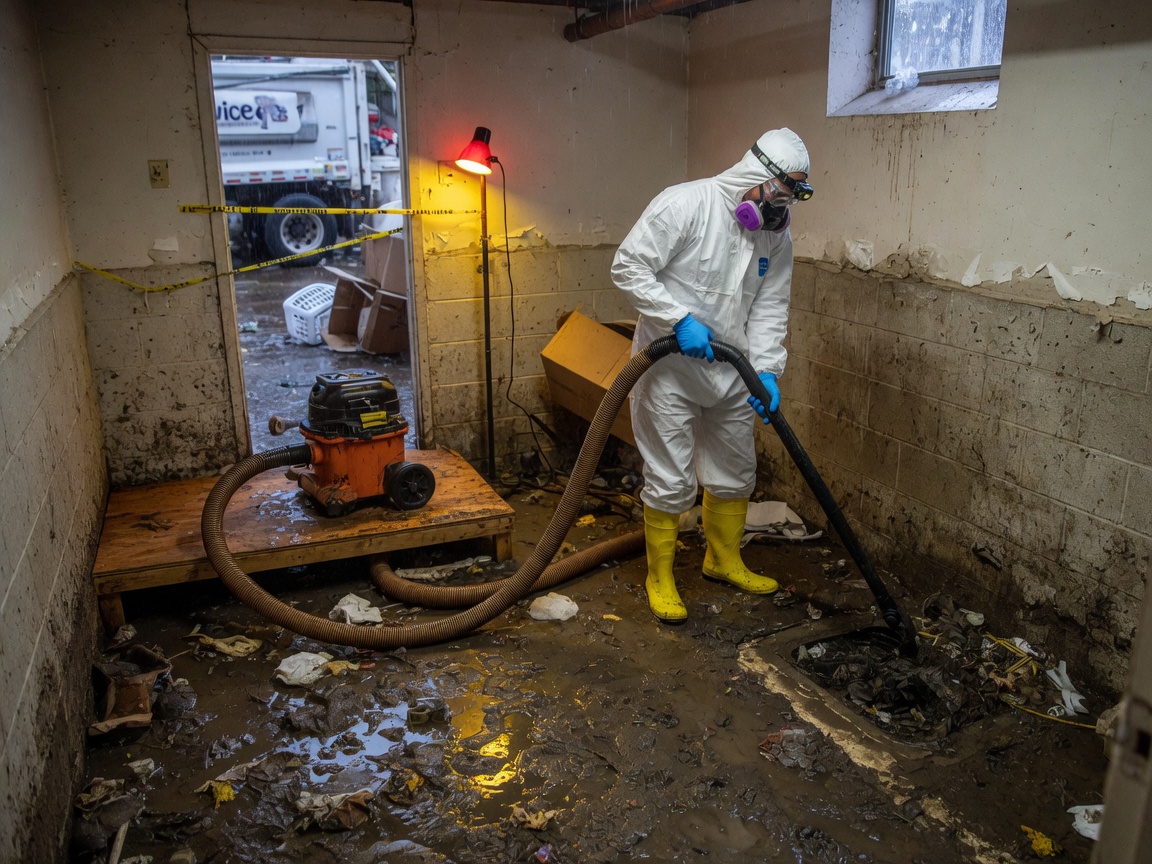
Heavy rains in Hattiesburg's humid subtropical climate often overwhelm older sewer lines in neighborhoods like The Hub City and University Heights, where many homes built before 1970 have clay or cast-iron pipes that crack under pressure from saturated soils. When stormwater infiltrates these lines near the University of Southern Mississippi campus or along Longleaf Trace, sewage can back up into crawlspaces and basements within hours. Crews must first isolate the affected laterals before extraction to prevent further spread into adjacent properties in Oak Grove.
Standing water mixed with sewage in Forrest County clay soils creates persistent odor and bacterial risks that standard drying equipment cannot fully address without repeated antimicrobial applications. Properties near the Hattiesburg Zoo frequently see backups during prolonged summer storms because low-lying terrain funnels runoff directly into residential sewer connections. Technicians check for hidden contamination under floor joists and behind baseboards, as moisture trapped in these older wood-frame structures can lead to hidden mold growth weeks after the initial event.
Restoration after heavy-rain sewage backups requires documenting every step for insurance adjusters, especially when homes sit on sloped lots common around Oak Grove. Removing contaminated drywall and insulation must occur before dehumidification begins, and all porous materials within the affected zone are discarded on site. Final clearance testing confirms bacterial levels meet safe thresholds before any reconstruction starts.
Technician insight
In Hattiesburg, the thing that catches most people out with Sewage Backup After Heavy Rain Cleanup is how the clay soils around Oak Grove and University Heights hold water against older foundations, forcing repeated extraction visits when homeowners try to handle drying themselves.
Summer Storm Backup in University Heights Crawlspace
Heavy rain overwhelmed a 1960s home's sewer line near the University of Southern Mississippi, sending sewage into the crawlspace. We extracted the water, removed saturated insulation, and applied targeted disinfectants. The structure dried completely within four days and passed clearance testing.
Sewage Backup After Heavy Rain Cleanup Services We Offer
✓Crawlspace Sewage Extraction
Removes standing sewage water and solids from crawlspaces common in University Heights homes after heavy rain, followed by targeted drying to protect floor structures.
✓Basement Backflow Cleanup
Extracts contaminated water from below-grade spaces in older Hattiesburg properties and applies hospital-grade disinfectants to concrete and masonry surfaces.
✓Contaminated Soil Remediation
Addresses sewage-saturated soil around foundations in Oak Grove and Forrest County lots where clay holds moisture and prolongs odor issues.
✓Sewer Line Camera Inspection
Locates cracks or blockages in residential laterals that allow heavy rain to trigger backups near the University of Southern Mississippi area.
✓Post-Storm Odor Neutralization
Treats lingering sewage smells in wood framing and insulation after rain-induced backups using fogging agents suited to humid Mississippi conditions.
Sewage Backup After Heavy Rain Cleanup Cost in Hattiesburg, MS
| Service | Typical Range | What Affects It |
|---|---|---|
| Initial Assessment and Camera Inspection | $250–$450 | Varies with property age and accessibility in older Hattiesburg neighborhoods. |
| Crawlspace Sewage Extraction | $800–$1,800 | Higher when clay soil saturation extends drying time. |
| Full Basement Cleanup and Sanitization | $1,200–$2,500 | Includes disposal of porous materials and multiple antimicrobial applications. |
| Odor Neutralization Add-On | $300–$600 | Required for homes with finished spaces above the affected area. |
Ranges are typical for Hattiesburg, MS and confirmed with an exact written quote before any work starts.
How it works
- 1
Site Assessment
Technicians arrive at the Hattiesburg address, map water migration through the structure, and identify the sewer connection point affected by recent rainfall.
- 2
Water Extraction
Industrial pumps and vacuums remove sewage and stormwater from crawlspaces or basements while containing runoff to prevent further property damage.
- 3
Sanitization and Drying
Antimicrobial solutions are applied to all contacted surfaces, followed by dehumidification and air movement tailored to the area's high humidity levels.
- 4
Final Clearance
Moisture readings and bacterial swabs confirm the space meets safety standards before homeowners return to the cleaned area.
Pricing
Pricing depends on affected square footage, depth of contamination, and whether crawlspace or basement access is required.