
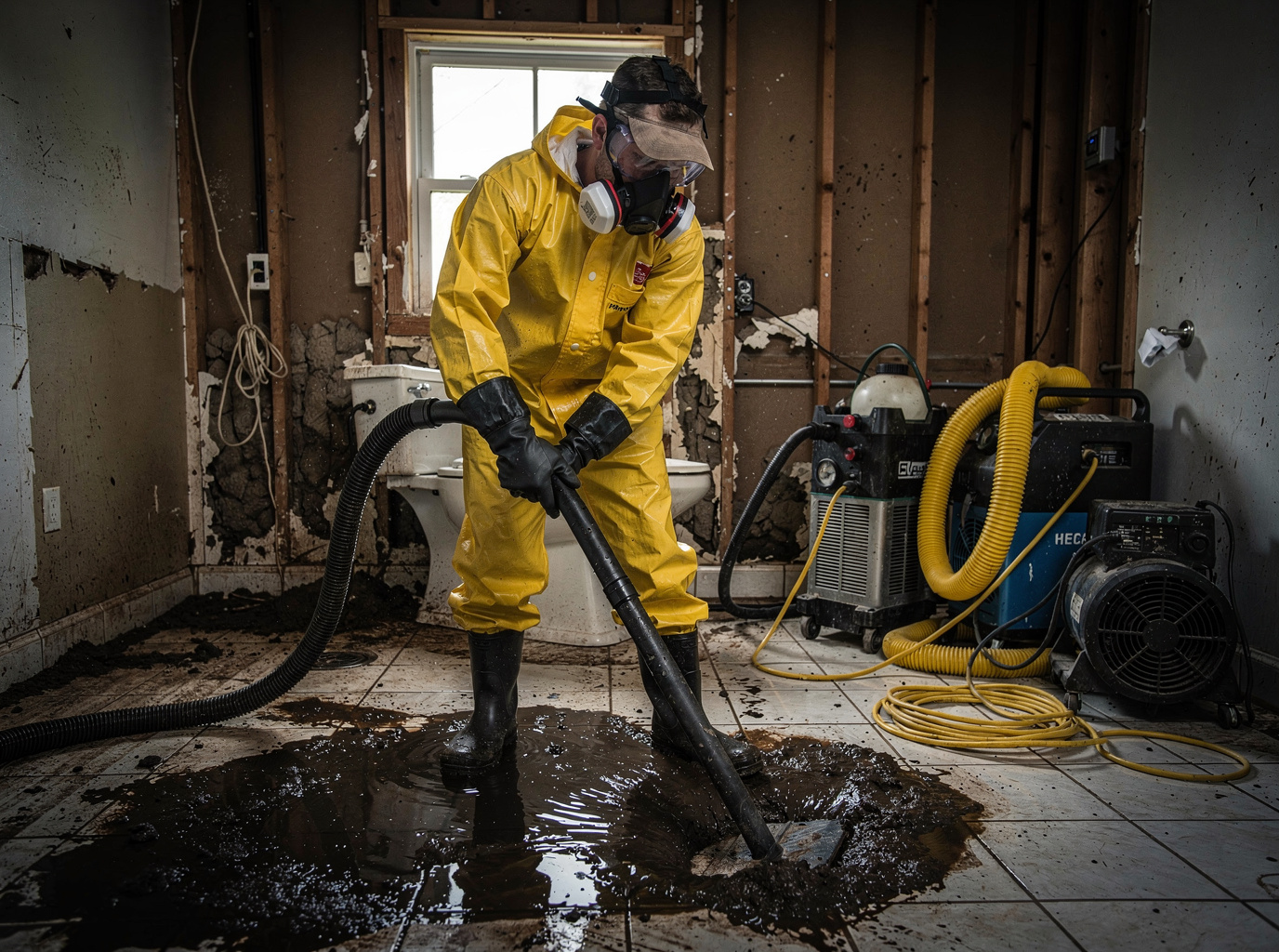
Sewage backups in Hattiesburg often stem from the area's humid subtropical climate, where heavy summer rains overwhelm older clay sewer lines common in The Hub City and near the University of Southern Mississippi. Black water carries pathogens that penetrate porous materials like hardwood floors and drywall in University Heights homes built before 1970. Technicians must remove and dispose of all saturated materials rather than drying in place, because residual moisture combined with mild winters allows bacteria to persist for weeks. Proper containment prevents cross-contamination into unaffected rooms, especially in single-story Oak Grove residences with slab foundations that trap water under cabinets and appliances.
Sanitization protocols follow EPA guidelines for category 3 water, using hospital-grade disinfectants applied after extraction and repeated HEPA vacuuming. In Forrest County, crews frequently encounter backups near Longleaf Trace trail crossings where tree roots invade aging pipes, creating recurring entry points. Edge cases include sewage that reaches HVAC systems in two-story homes, requiring full duct cleaning to avoid airborne spread. Homeowners should avoid entering affected spaces until air quality testing confirms safe levels, as hidden pockets behind baseboards can re-contaminate cleaned areas during the next rainfall.
Local terrain with sandy loam soils allows sewage to migrate quickly under driveways and sidewalks, complicating extraction in neighborhoods around the Hattiesburg Zoo. Crews use moisture meters and thermal imaging to locate moisture that standard visual checks miss. All work includes documentation for insurance claims, noting the exact square footage removed and the products applied. This level of detail matters most in older rental properties near downtown where multiple units share sewer lines.
Technician insight
In Hattiesburg, the thing that catches most people out with Black Water Cleanup & Sanitization is how quickly summer humidity lets bacteria regrow in the sandy soils under Oak Grove slabs; if you skip pulling the bottom two feet of drywall, the odor returns within days after the next rain.
University Heights backup after heavy rain
Sewage backed up through floor drains into a 1960s home near USM during a summer storm. Water had wicked into carpet and baseboards across the living room and hallway. Crews removed all affected flooring and drywall, applied antimicrobial agents, and ran dehumidifiers for four days until readings dropped below 12 percent. The homeowner was able to move back in without lingering odors or insurance delays.
Black Water Cleanup & Sanitization Services We Offer
✓Contaminated Flooring Removal
Extraction and disposal of sewage-soaked carpet, pad, and hardwood in affected rooms to eliminate hidden bacterial reservoirs.
✓Wall Cavity Sanitization
Removal of baseboards and lower drywall followed by antimicrobial treatment to stop pathogen migration into framing.
✓HVAC System Cleaning
Inspection and decontamination of ducts and handlers when black water reaches forced-air systems common in University Heights homes.
✓Crawlspace Sewage Extraction
Pumping and drying of sewage that enters pier-and-beam foundations typical in older Oak Grove properties.
✓Appliance and Fixture Cleaning
Thorough sanitization of toilets, sinks, and washing machines impacted by backup to restore safe use.
Black Water Cleanup & Sanitization Cost in Hattiesburg, MS
| Service | Typical Range | What Affects It |
|---|---|---|
| Bathroom or small room backup | $1,200–$2,400 | Higher when sewage reaches subfloor or adjacent rooms. |
| Whole-home cleanup under 1,000 sq ft | $3,500–$6,000 | Includes multiple rooms and basic HVAC inspection. |
| Crawlspace extraction add-on | $800–$1,600 | Varies with standing water depth and access difficulty. |
| HVAC decontamination | $600–$1,200 | Required when ducts test positive for contamination. |
Ranges are typical for Hattiesburg, MS and confirmed with an exact written quote before any work starts.
How it works
- 1
Initial Assessment
Technician inspects the property, identifies contamination boundaries, and documents affected materials using moisture meters.
- 2
Containment Setup
Plastic barriers and negative air machines isolate the work zone to prevent spread into clean areas of the home.
- 3
Extraction And Removal
Standing water is pumped out and all saturated porous materials are cut out and bagged for disposal.
- 4
Sanitization And Drying
EPA-registered disinfectants are applied, followed by dehumidification and air scrubbing until moisture levels reach safe standards.
- 5
Final Clearance
Post-treatment inspection confirms no lingering odors or moisture before barriers are removed.
Pricing
Pricing depends on square footage affected, depth of contamination, and whether HVAC or crawlspace work is required; inspection provides exact scope before work begins.