
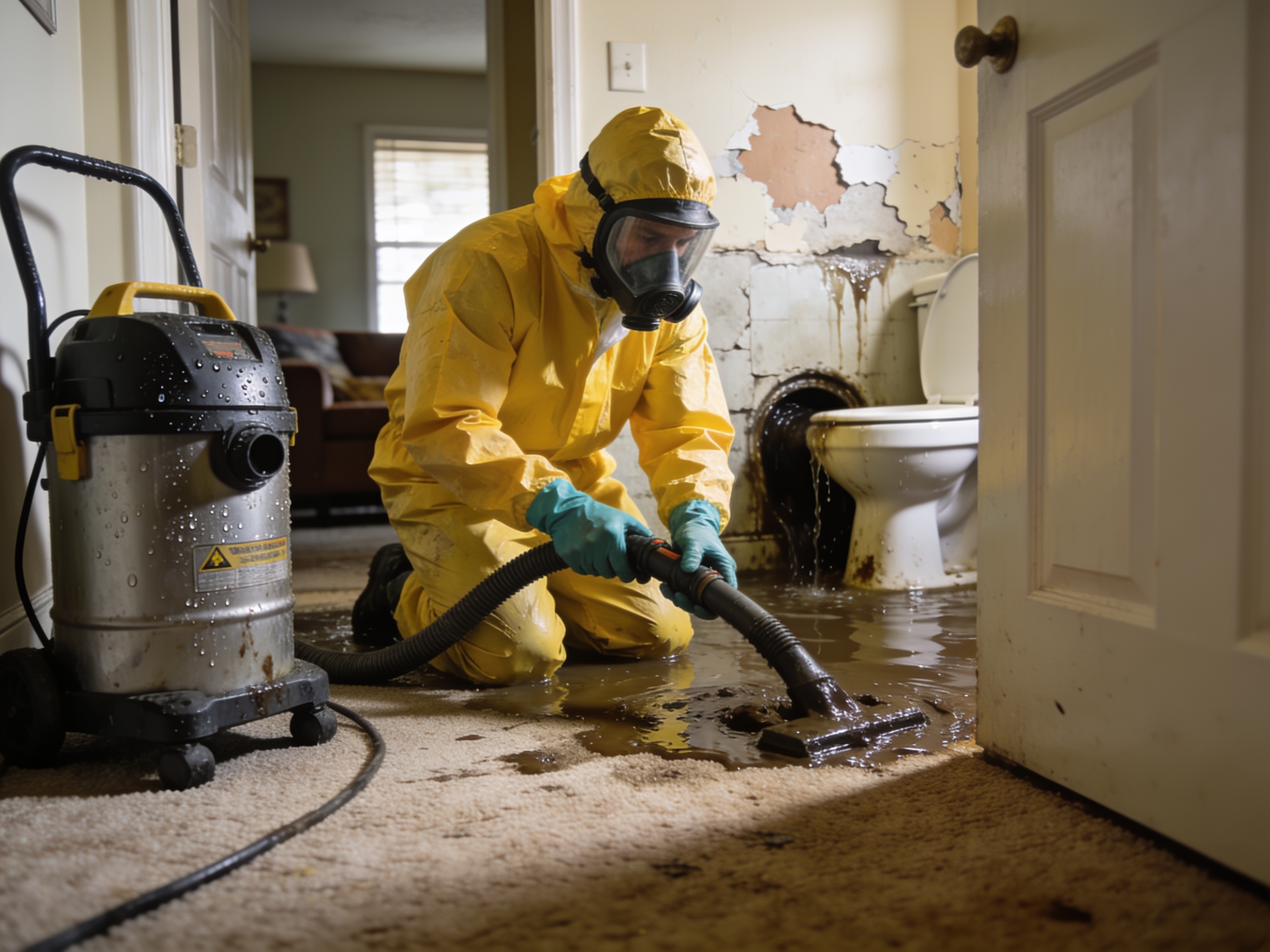
Multifamily sewage backups in Hattiesburg often originate from shared laterals in older apartment stock near the University of Southern Mississippi. These lines clog from grease, wipes, and root intrusion common in the area's clay-heavy soils. Crews must isolate individual units while protecting common corridors and laundry rooms where moisture lingers in the humid subtropical climate. Failure to address both the source and aerosolized contaminants leaves residual odors that travel between floors.
Extraction in these buildings requires negative air machines rated for multiple units and antimicrobial application on porous materials like carpet pad and baseboard. In complexes along Longleaf Trace or in Oak Grove, we frequently encounter backups that reach ground-floor storage units after heavy summer rains overwhelm aging municipal lines. Technicians document every affected unit for property managers so insurance claims separate owner versus tenant responsibility without delay.
Edge cases include backups that migrate through slab cracks into adjacent units or HVAC returns, spreading odors building-wide. We test for cross-contamination before any reconstruction and use moisture meters on shared walls to prevent hidden mold growth that thrives in Hattiesburg's mild winters and high humidity. Property managers receive a written scope that lists every unit number and material removed so future turnover costs stay predictable.
Technician insight
In Hattiesburg the thing that catches most people out with Apartment & Multifamily Sewage Backup Cleanup is how quickly sewage travels through the old cast-iron laterals under University Heights buildings once roots or grease hit the line. Summer humidity keeps the moisture in the slab for weeks, so you have to pull baseboards and check the unit above even when the backup looks contained to the first floor.
Oak Grove Complex Backup After Heavy Rain
Sewage backed up through floor drains in three ground-floor units of an Oak Grove apartment complex after a summer storm overwhelmed the shared lateral. Camera work showed a root blockage 40 feet from the cleanout. We isolated the affected units, extracted water and removed saturated carpet and pad, treated common hallways, and cleared the line. All three units passed moisture testing within five days and were turned over without odor complaints.
Apartment & Multifamily Sewage Backup Cleanup Services We Offer
✓Multifamily Unit Extraction
Rapid removal of contaminated water and solids from individual apartments while isolating shared plumbing to prevent spread to neighboring units.
✓Common Area Decontamination
Thorough cleaning and antimicrobial treatment of hallways, laundry rooms, and stairwells that receive aerosolized sewage during building-wide backups.
✓Shared Lateral Camera Inspection
Video scoping of building laterals to locate blockages before excavation or hydro jetting in Forrest County multifamily properties.
✓Rental Turnover Sewage Restoration
Complete removal and replacement of affected flooring and cabinetry so units can be re-leased quickly without lingering odors.
✓HVAC Cross-Contamination Remediation
Duct cleaning and filter replacement when sewage aerosols travel through return air systems common in older University Heights apartments.
Apartment & Multifamily Sewage Backup Cleanup Cost in Hattiesburg, MS
| Service | Typical Range | What Affects It |
|---|---|---|
| Single apartment extraction | $650–$1,400 | Varies by square footage and material saturation |
| Two-to-four unit building | $1,800–$3,200 | Includes common area treatment |
| Shared lateral camera inspection | $275–$450 | Required before jetting or excavation |
| HVAC decontamination add-on | $400–$750 | Per system when aerosols reach returns |
Ranges are typical for Hattiesburg, MS and confirmed with an exact written quote before any work starts.
How it works
- 1
Site Assessment
Map every affected unit and trace the backup path through shared lines using camera inspection at the Hardy Street base.
- 2
Containment Setup
Install negative air and physical barriers to keep contaminants from migrating between apartments and common areas.
- 3
Extraction and Removal
Remove standing water and saturated materials from each unit while treating surfaces with hospital-grade disinfectants.
- 4
Verification and Clearance
Retest moisture levels and provide written clearance for each unit before reconstruction or re-occupancy.
Pricing
Pricing depends on number of units affected and whether the backup reached common areas or HVAC systems; upfront quotes given after on-site assessment.